Ergonomics & Posture
The Ergonomics of Sleeping Upright: Preventing Cervical Strain
When you fall asleep sitting up, the muscles that hold your head steady relax, and gravity pulls the head forward or sideways. Keeping the head stacked over the shoulders — with something to stop it falling — is the key to waking without a stiff neck.
Last reviewed
General information for healthy travelers, not medical advice. See a clinician for persistent or severe pain.
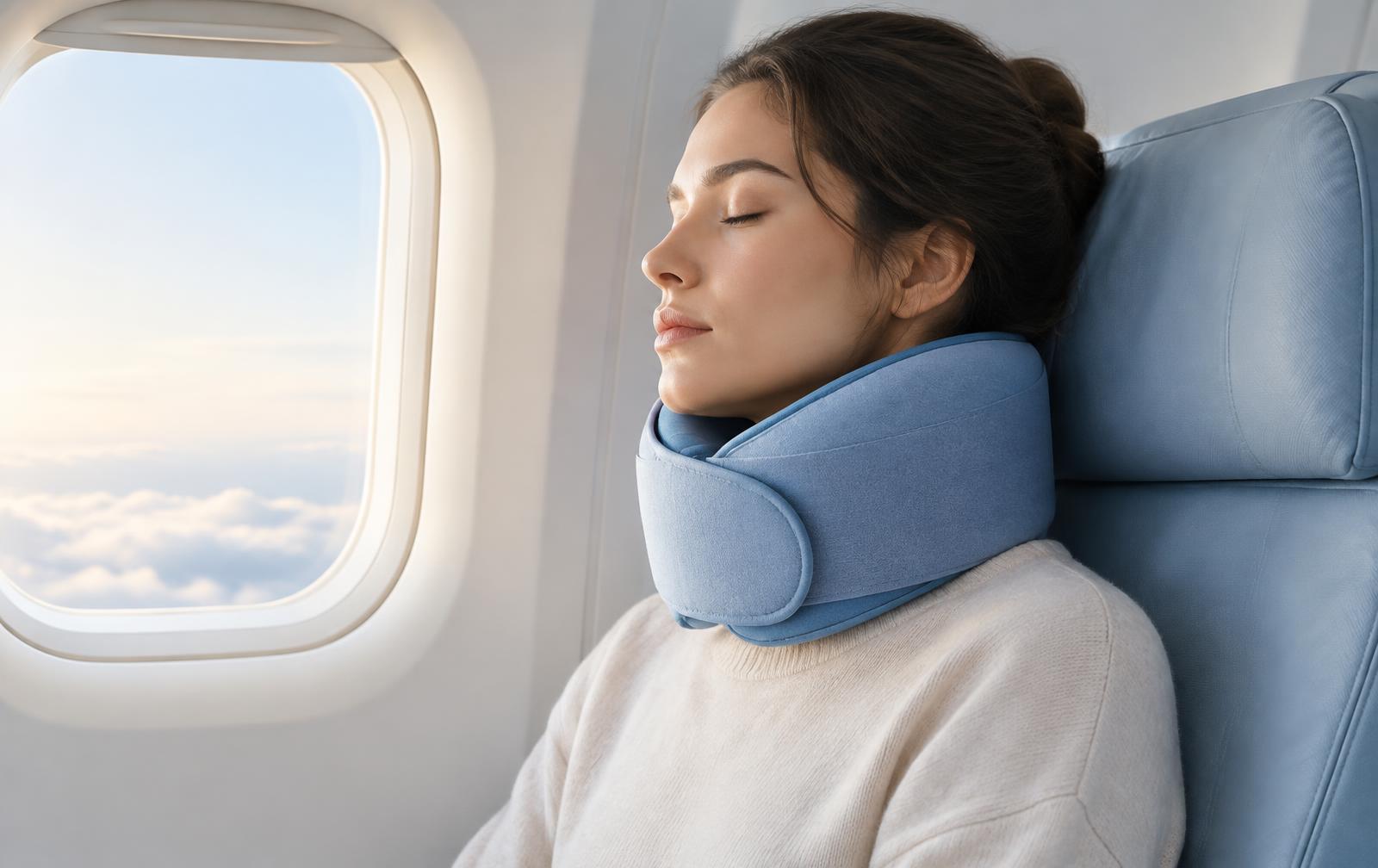
What happens to your neck when you doze off
An adult head is heavy relative to the small muscles and joints of the neck. While you are awake, those muscles constantly make tiny corrections to keep it balanced. As you drift into deeper sleep, muscle tone drops and those corrections stop.
In a bed, the mattress and pillow take the weight. In an upright seat, nothing does — so the head tips until something stops it: your chest, your shoulder, the seat wing, or a neighbor. The further it falls from neutral, the more the neck's ligaments and muscles are stretched.
The three directions of head drop
Forward (flexion)
The most common in upright seats, especially if the seat back is near vertical. It is the motion most likely to wake you with a jerk. Front or chin support addresses it directly.
Sideways (lateral flexion)
More likely when the seat is reclined slightly or you lean toward a window. Side cushions, U-pillows and window seat supports help here.
Backward (extension)
Less common, but it happens when a headrest pushes the head forward and then you slump, or in deeply reclined seats. A pillow that is too thick behind the neck can also tilt the head forward, so thinner is often better at the back.
Seat setup before you sleep
- Sit all the way back so your lower back touches the seat. A small rolled sweater or lumbar cushion can fill the gap.
- Recline whatever you reasonably can. Even a few degrees moves your center of mass back and reduces forward drop.
- Adjust the headrest wings (if available) so they meet the sides of your head, not your shoulders.
- Keep both feet supported. Dangling legs pull you forward in the seat over time.
- Then add your neck support, and check it doesn't press on your throat.
Choosing support by mechanism
| If your head… | Look for | Read more |
|---|---|---|
| Drops forward | Chin rest, structured wrap collar | Collar vs U-pillow comparison |
| Rolls to the side | Side bolsters, U-pillow, lean-on wedge | Window seat guide |
| Does both | 360° support or wrap collar | Middle seat guide |
| Is pushed forward by the headrest | Thin-backed collar, no thick rear cushion | Travel neck pillows guide |
See the collar vs U-pillow comparison for a direct breakdown, or use the pillow finder.
When to get medical advice
Most travel stiffness eases within a day or two. Seek medical advice if neck pain follows an injury, comes with numbness, tingling or weakness in the arms, a severe headache, or doesn't improve. If you have obstructive sleep apnea or use CPAP, talk with your clinician about sleeping upright in transit. More practical steps are in preventing neck pain when flying.
New to the terms used here? The glossary defines them in plain language.
Put the principles into practice.
Find your support type