Travel Pillows & Collars
Anatomy of Foam: Density, Rebound, and Support in Neck Collars
Memory foam molds slowly to your shape and feels plush; high-resilience foam springs back quickly and feels more supportive; internal frames or firm inserts provide structure that foam alone can't. The best collars often combine a soft comfort layer over a firmer core.
Last reviewed
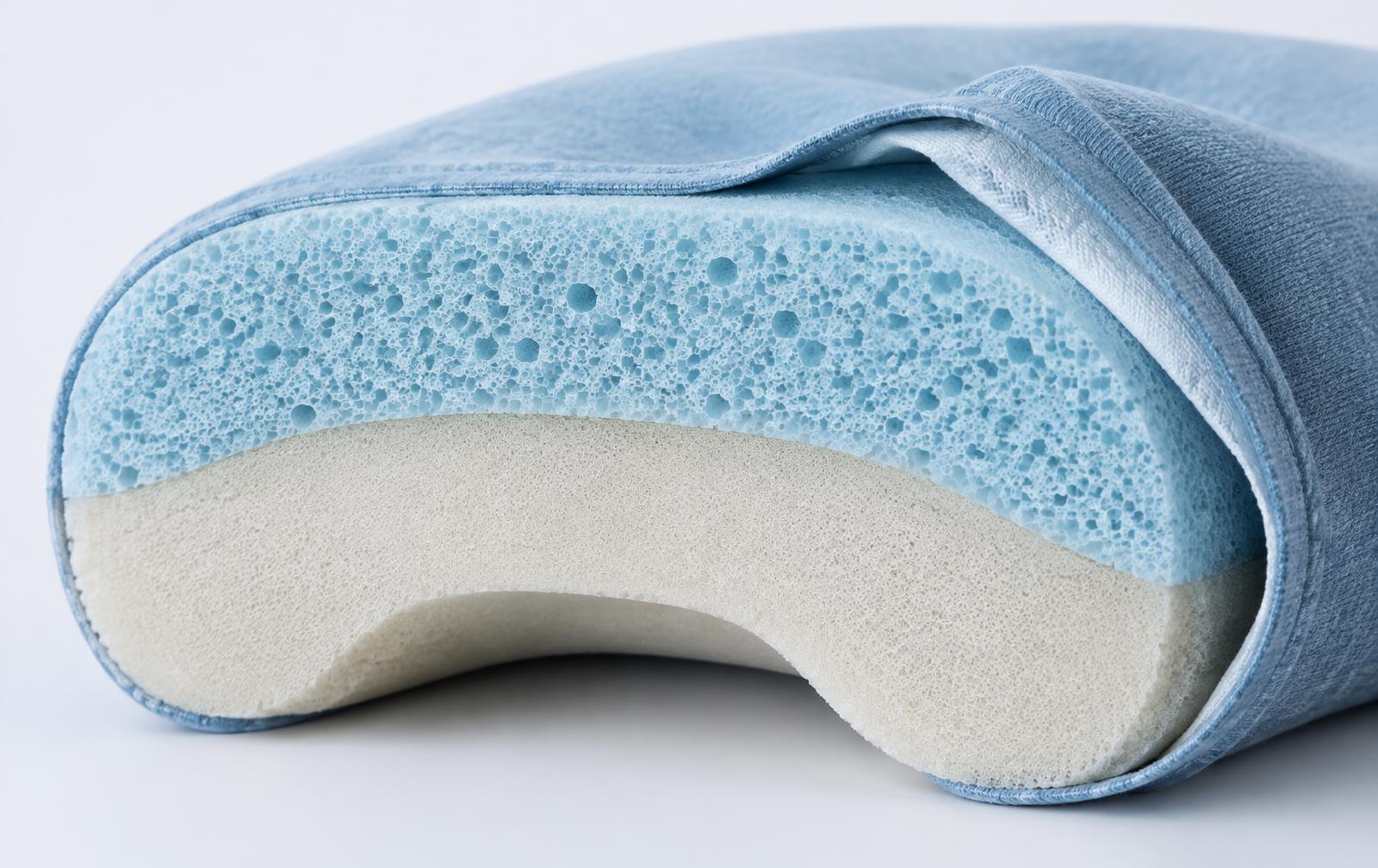
The main materials
Viscoelastic (memory) foam
Responds to heat and pressure, slowly conforming to your neck and recovering shape when released. It spreads pressure well but can trap heat and gets firmer in cold cabins.
High-resilience (HR) polyurethane foam
Bouncier and quicker to recover. It pushes back more, which helps hold the head up, and tends to sleep cooler than dense memory foam.
Gel-infused and open-cell foams
Manufacturers add gel or open the cell structure to improve airflow. The effect on temperature varies — breathable covers often matter as much as the foam.
Internal frames and inserts
Some collars use a plastic rib, firm foam spine or adjustable insert to provide structure. This is what lets a thin wrap collar resist head drop without bulk.
Microbeads and fiber fill
Squishy and moldable, but they shift away from the load, so they offer less consistent support.
Density, firmness and rebound — what the specs mean
Density is how much foam material is in a given volume (usually listed in pounds per cubic foot in the US). Higher density generally means more durability, but it doesn't directly mean firmer. Firmness describes how hard the foam feels when pressed. Rebound is how quickly it returns to shape.
| Property | Higher value means | Trade-off |
|---|---|---|
| Density | Usually more durable, holds shape longer | Heavier, can feel warmer |
| Firmness | More head support | Less plush, pressure points if too firm |
| Rebound speed | Feels lively, recovers after packing | Less 'hug' than slow memory foam |
| Open-cell structure | Better airflow | Can feel less dense |
Product listings vary in how they report these numbers, so treat them as rough guides rather than direct comparisons between brands.
Care and longevity
- Most foam cores should not go in a washing machine — remove and wash the cover instead, following the label.
- Spot-clean foam with a damp cloth and mild soap, and air-dry fully before packing.
- Compressed foam may take time to recover after being squeezed into a bag.
- Look for certifications such as CertiPUR-US for foams tested for certain emissions and substances — see eco-friendly materials.
Weighing foam against air? Read memory foam vs inflatable pillows or return to the travel neck pillows guide.
See how foam choices play out in real pillows.
Compare airplane pillows