Travel Pillows & Collars
Travel Neck Pillows: Types, Mechanics, and Selection Guide
The best travel neck pillow is the one that stops your head from moving in the direction it naturally falls. For most people sitting upright that means forward, so look for front or chin support first, side support second, and softness last.
Last reviewed
Why most neck pillows disappoint
The classic U-shaped pillow was designed to cushion the sides of your neck. That helps if your head tips sideways, but when you fall asleep sitting up, the neck muscles relax and the head usually drops forward. The open front of a U-pillow offers nothing to stop that, so many people wake with a jolt or a sore neck.
Understanding which way your head falls is the single most useful thing you can know before buying. Our ergonomics guide explains the mechanics in more detail.
The five main types of travel neck support
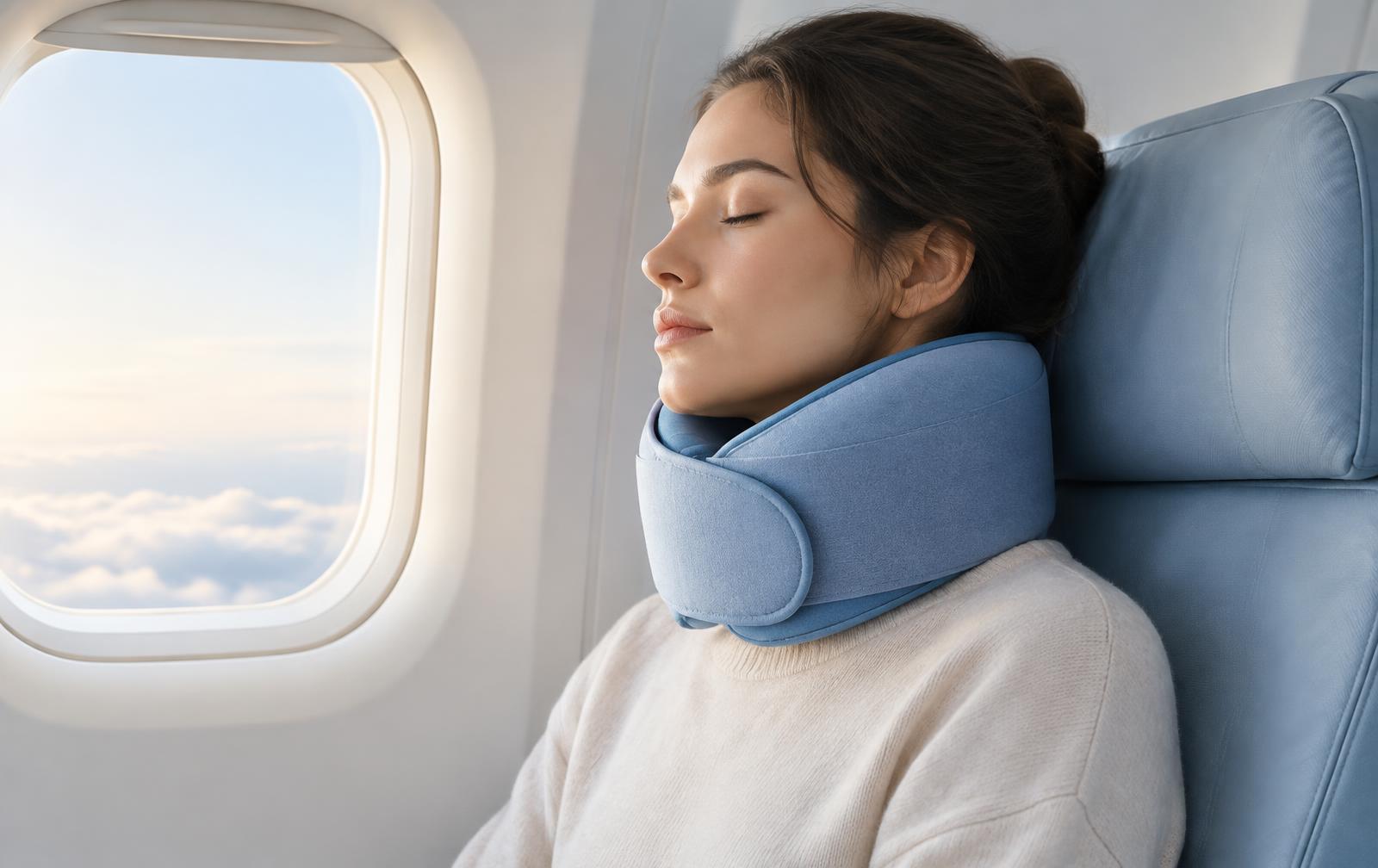
1. Structured wrap-around collars
A fabric wrap with an internal support panel or firm foam that sits under the chin and along one or both sides of the jaw. They resist forward and sideways drops and pack fairly flat. They can feel warm and take a minute to fit correctly — see our airplane fitting guide.
2. Memory foam U-pillows
Comfortable and familiar, good for side support and for leaning against a window. Bulky to pack and weak at stopping forward head drop unless worn backwards or paired with a chin strap.
3. Chin-support and 360° pillows
Thicker at the front with a raised chin rest, or a full ring of support. Best for people whose head drops forward and who sit in the middle seat. Read more in chin support travel pillows.
4. Inflatable pillows
Lightest and smallest when packed, with adjustable firmness. They can feel less comfortable against the skin and may slowly lose air. Compare them in memory foam vs inflatable.
5. Asymmetric and lean-on supports
Wedge-shaped cushions, window-leaning pillows and seat-attached head straps. Useful in window seats and some car seats, less helpful in aisle or middle seats.
Quick comparison
| Type | Forward support | Side support | Packability | Best for |
|---|---|---|---|---|
| Structured wrap collar | Strong | Good (one or both sides) | Good | Forward head drop, any seat |
| Memory foam U-pillow | Weak | Good | Poor | Window seats, casual naps |
| Chin-support / 360° | Strong | Good | Fair | Middle seats, deep sleepers |
| Inflatable | Varies by shape | Fair | Excellent | Carry-on-only travelers |
| Asymmetric / lean-on | Weak | Strong (one side) | Fair | Window seats, car passengers |
How to choose in four questions
- Which way does your head fall? Forward → collar or chin support. Sideways → U-pillow or asymmetric. Both → 360° or wrap collar.
- Where do you usually sit? Window seats give you a wall to lean on; middle seats give you nothing. See middle seat support.
- How much space do you have? If you travel with a personal item only, favor inflatable or flat-folding collars.
- Do you run warm? Look for breathable covers and open-cell or ventilated foam — our foam guide explains the trade-offs.
Prefer a guided answer? Try the travel pillow finder.
Fit, care and safety
- A support should hold your head without pressing on the front of your throat. If you feel pressure on your windpipe, loosen or reposition it.
- Removable, machine-washable covers make a real difference on frequent trips.
- Travel pillows are comfort products, not medical devices. If you have a neck injury or a diagnosed condition, ask your clinician before using a firm collar.
Not sure which type suits you?
Use the pillow finder